
The question looms large in the face of another potentially difficult wildfire season
As spring moves toward summer, Kamloops residents are once again faced by a question that now looms over the interior of B.C. year after year — what will the wildfire season bring?
And more importantly, will we be ready if devastating fire strikes in the way it has in so many B.C. towns and cities in recent years?
Mike Flannigan, a wildfire scientist at Thompson Rivers University, said as in any year, what happens with wildfires will depend on two factors.
“No one knows the future. It will depend on day-to-day weather and on ignitions, whether from lightning or people. Those will really determine what the season looks like,” he said.
In the interior, conditions underlying this summer’s wildfire season forecast are concerning but there have been years when things looked worse, Flannigan said.
The Thompson region is well below normal for snowpack and valley bottoms were largely snow-free through the winter. Water levels in reservoirs and rivers are lower than usual. The long-range forecast suggests a warmer than usual summer.
“I think our problems are going to be in the typical mid-July through August window. And if this El Niño kicks in, it could produce a warm fall, so fire season could go well into September. Maybe not as severe a year as 2021 or 2023, but the potential’s there.
“And things could get a lot worse — a hotter and drier pattern than what we’re projecting would make for a horrendous year, and that’s not off the table. But the starting point isn’t as bad as some other years,” Flannigan said.
Flannigan said he sees increasing interest from many people and organizations about seasonal wildfire forecasts, thanks to the extensive fires B.C. has experienced in recent years. More area has burned in B.C. from 2017 to 2025 than from 1950 to 2016. The top six fire years have all been since 2017.
“There’s been more fire, and more impactful fire. Jasper, Lytton, Fort McMurray, Slave Lake, West Kelowna. There’s been a lot of fire in BC since 2017. That was a record-breaking year, then 2018 broke that record, then 2021 — the heat event, 49.6 degrees in Lytton, and the town essentially burned down.
“Fire is definitely on people’s radar,” he said.
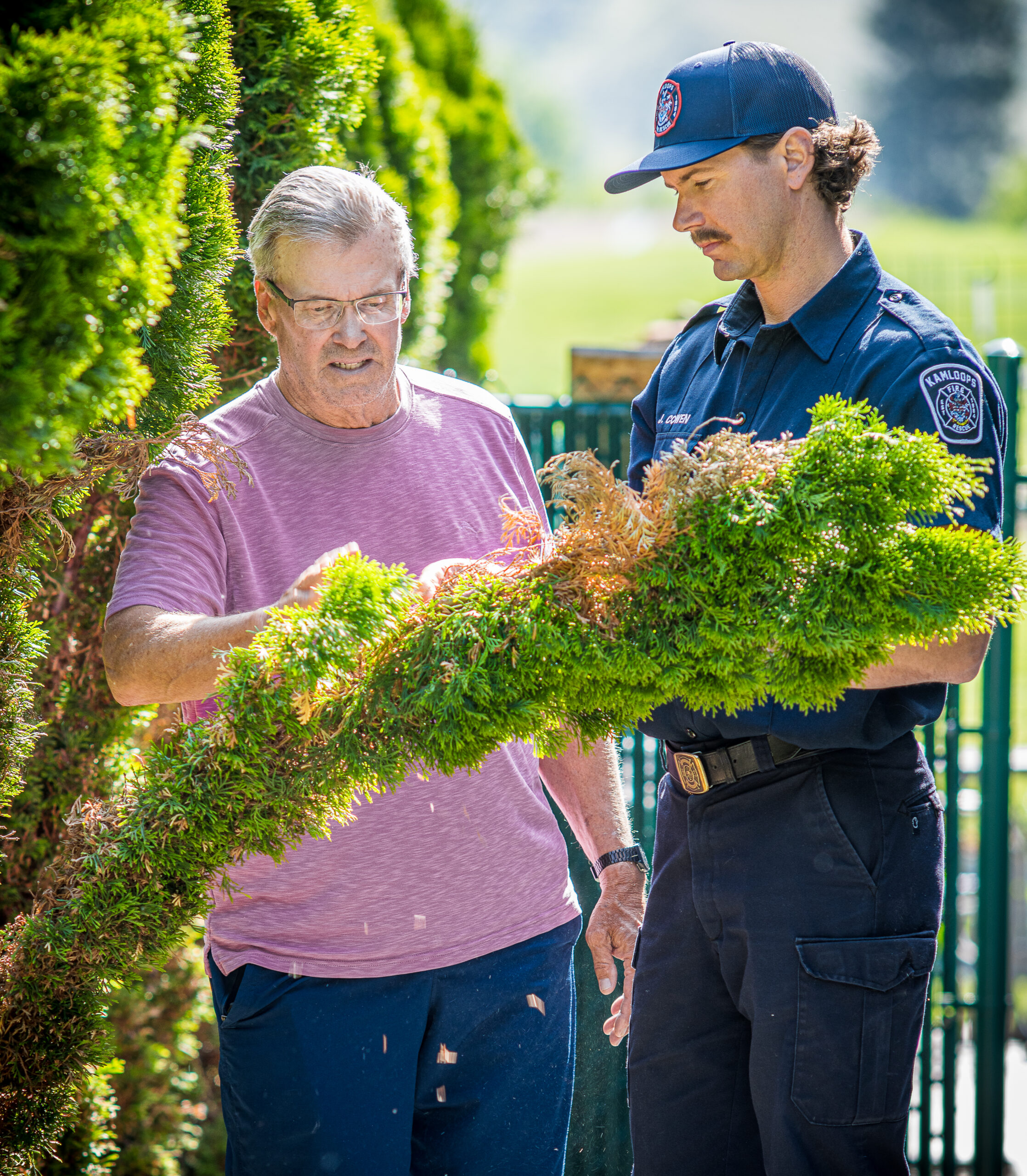
Flannigan hopes increased awareness translates to action, noting that preparation is one way to mitigate impacts related to forest fire. From FireSmarting properties to actively planning and preparing for evacuation ahead of time, there is much citizens can do to protect themselves, their families and their properties.
The answers to questions about how prepared a community actually might be in the face of crisis are both simple and complicated at the same time, and often depend on how disaster arrives. There are two kinds of threat that emergency planners must account for, and they demand very different things from both government and the public.
The first kind gives warning and time, Flannigan noted, such as a wildfire burning in distant terrain and moving slowly toward a community, or a river rising over days toward potential flooding. Planners can coordinate, first responders can prepare, and residents can get ready to act.
Flannigan said the second kind of threat arrives without notice, such as a lightning strike on a hot evening sparking an intense wildfire close to homes, or when an already burning fire displays unexpected behaviour in the face of high winds.
What happens next requires the best of emergency planning and preparation and a keen awareness on the part of all about what needs to happen. It is in these kinds of situations that events have the greatest potential to cause devastating harm.
On July 1, 2021, an evening lightning strike near homes in Juniper Ridge sparked an instant wildfire. It had been hot and dry, with a record “heat dome” pushing temperatures to 48C. Flames quickly spread beyond the strike zone and black smoke rose ominously.
City fire crews were fast on scene, and an evacuation order was issued for part of the neighbourhood nearest the flames because there was an immediate risk to a number of homes.
Juniper Ridge residents, however, seeing both flames and smoke and hearing from neighbours and or on social media posts from friends and family that they needed to get out clogged the only route out of the neighbourhood.
Many were stuck in vehicles for more than two hours in a slow-moving chain while others in 4×4 trucks pushed through locked gates on an unpaved pipeline road exit the area. It was chaotic and frenzied, leaving the neighbourhood alarmed and calling for change.
Had that fire spread more aggressively or if city fire crews had not been able to contain the flames quickly, that long line of vehicles trying to escape could have proved a deadly trap.
Flannigan pointed to other countries that also suffer intense fires, including Australia and the U.S., noting wildfires in California and in Hawaii in recent years have turned deadly, causing significant loss of life.
“The question is really — are we good, or have we been fortunate? I think it’s a combination of both. I want to give credit to Kamloops Fire and Rescue. They are well trained to deal with brush fires and urban interface fires, and that helps a great deal.
“But have we been dodging bullets, and is one coming for us? Possibly. We are in a high-risk location, and (devastating fire) is a possibility we’d better be prepared for.”